From 2012 to present
This CPx5 is an evolution of the CPU taking advantage of tecnology advances, the key difference being the use of flash memory instead of battery maintained memory.
The CPx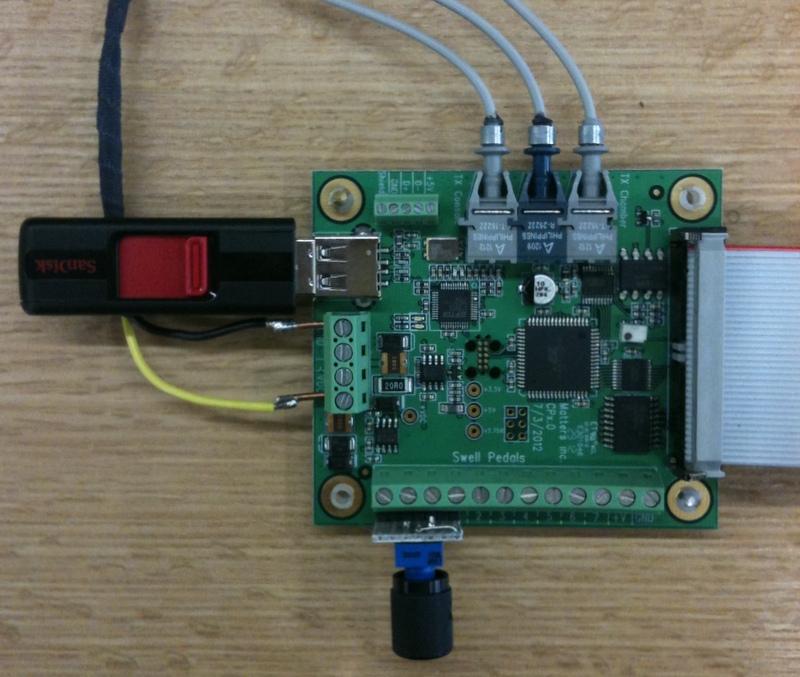 upgrade or replacement for the CPU board occurred in 2012. This surface mount technology board incorporates a USB port for thumb drive or flash drive memory storage of all memory levels and record/playback functionality. Also embedded in this board is the AtoD capability requiring the use of potentiometers to read the expression pedal positions. This upgrade board is fully backward compatible with the CPU/Input/Output layout.
An upgraded Output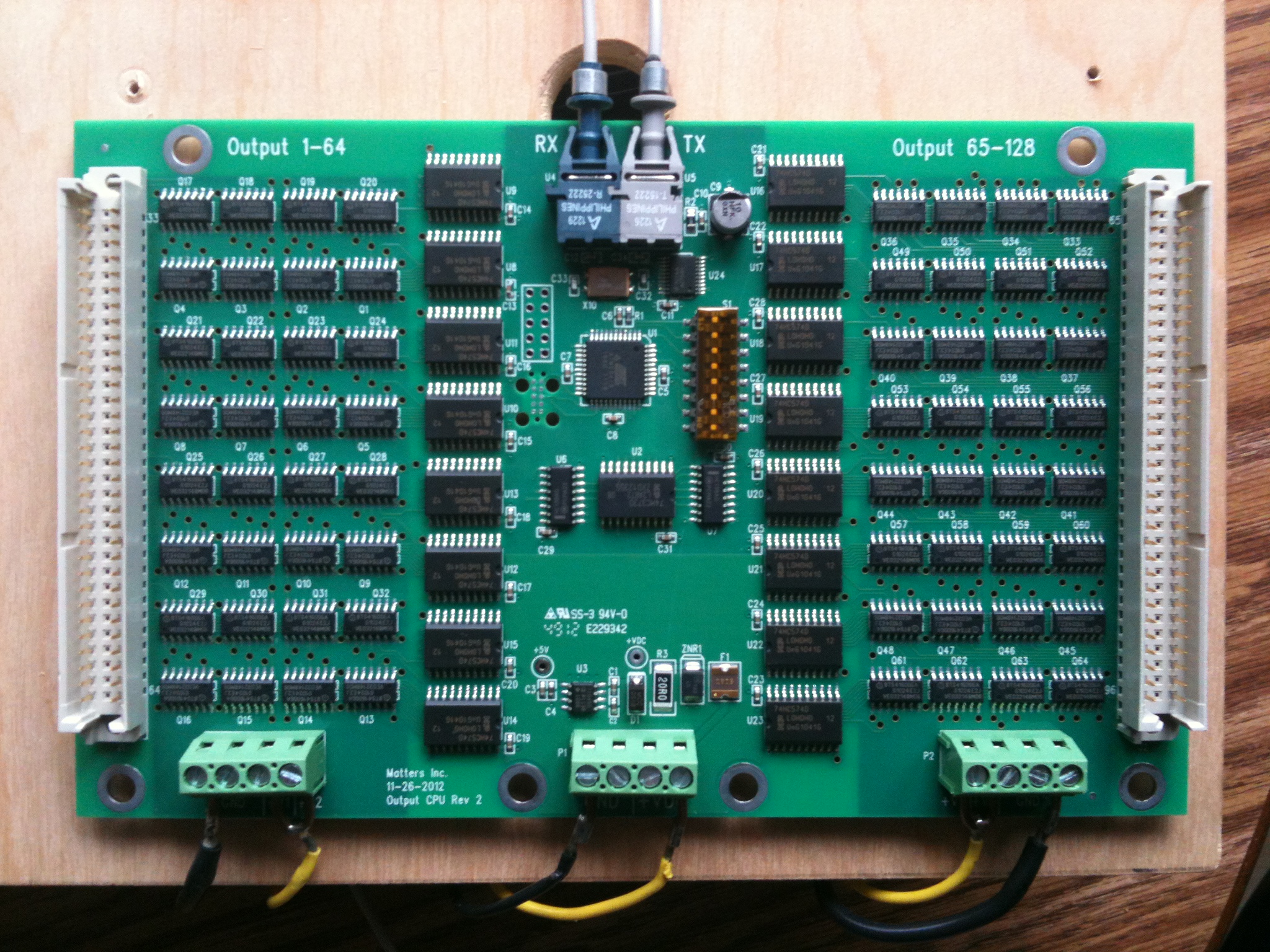 board, available in 2013, incorporates the use of surface mount chips and new high current driver chips. These chips, available in either polarity, negative common (high side switching) or positive common (low side switching) can now handle 1.2 amps per pin with no heat rise. Advantages of these new switches are protection against thermal, overload, over current, over voltage, and ESD. The result is a chip that will not be damaged if a magnet coil or output wire is shorted out. Combination action magnets, pull-down magnets, and low resistance pedal action magnets can be controlled with no additional or external components at 100% duty cycle.
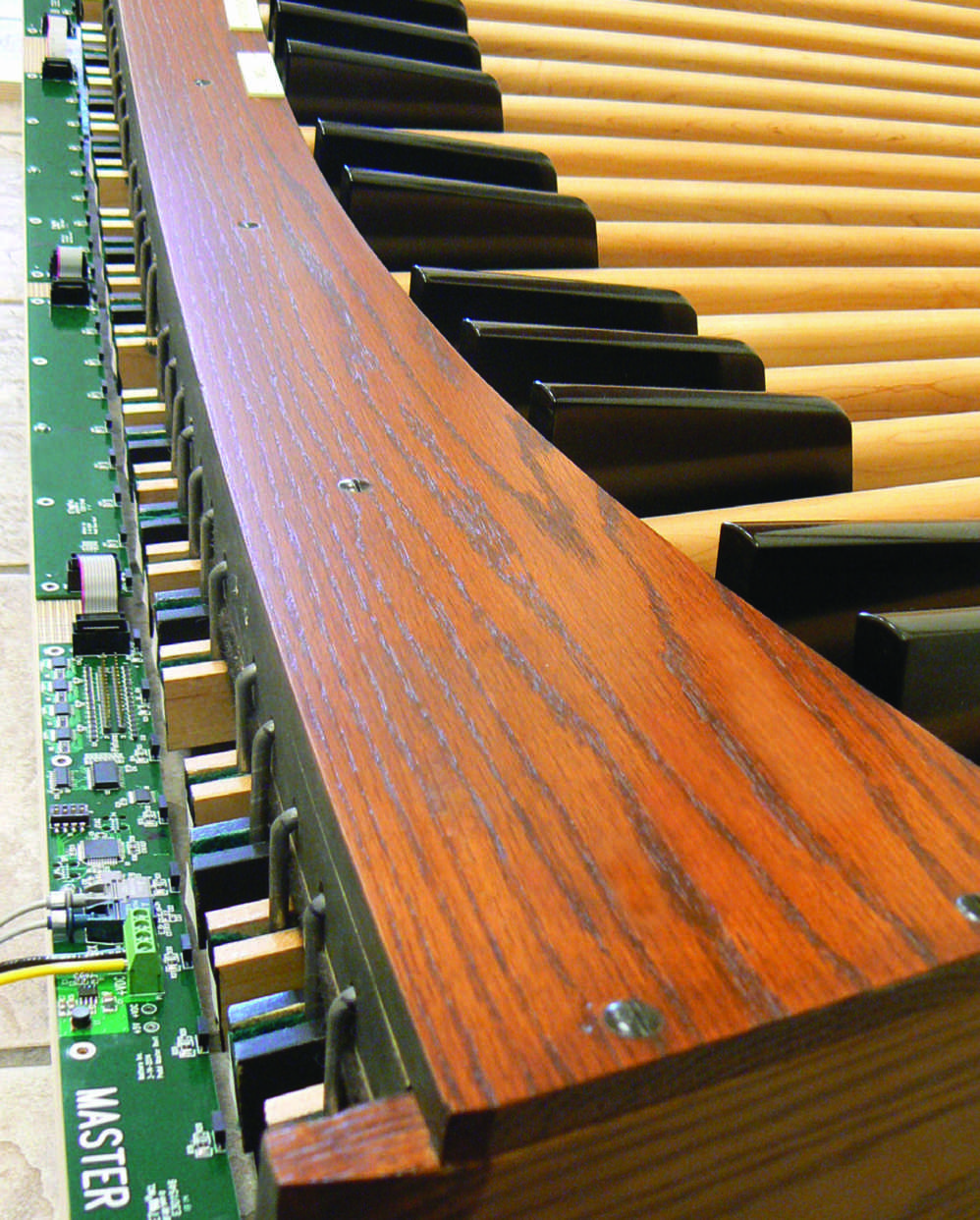
While individual optical pedal key contacts were available since 2010, 2014 saw the introduction of a 4 circuit card layout that put 32 sensors in place for reading the pedalboard without any wiring harness. Thin enough to bend to match the curve at the front of a pedalboard, this set is designed to be mounted in the bottom of the console and “read” the end of the wood pedal key as if moves down in front of the sensor.
In 2014 a surface mount version of the Input 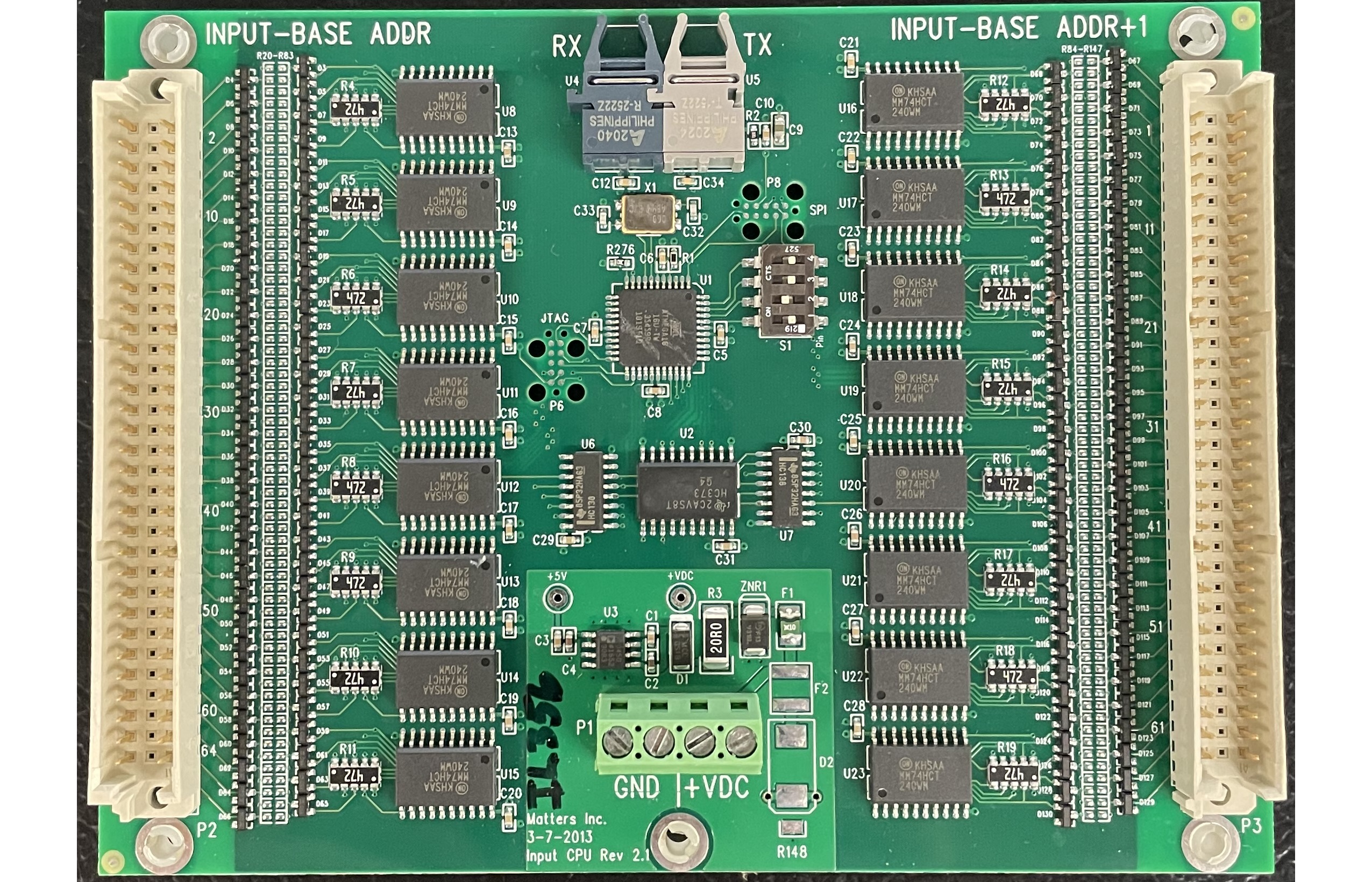 card was introduced, completely compatible both in size, layout, and functionality as the through hole board that it replaces.
Also upgraded to surface mount technology was the fiber optic repeater and translator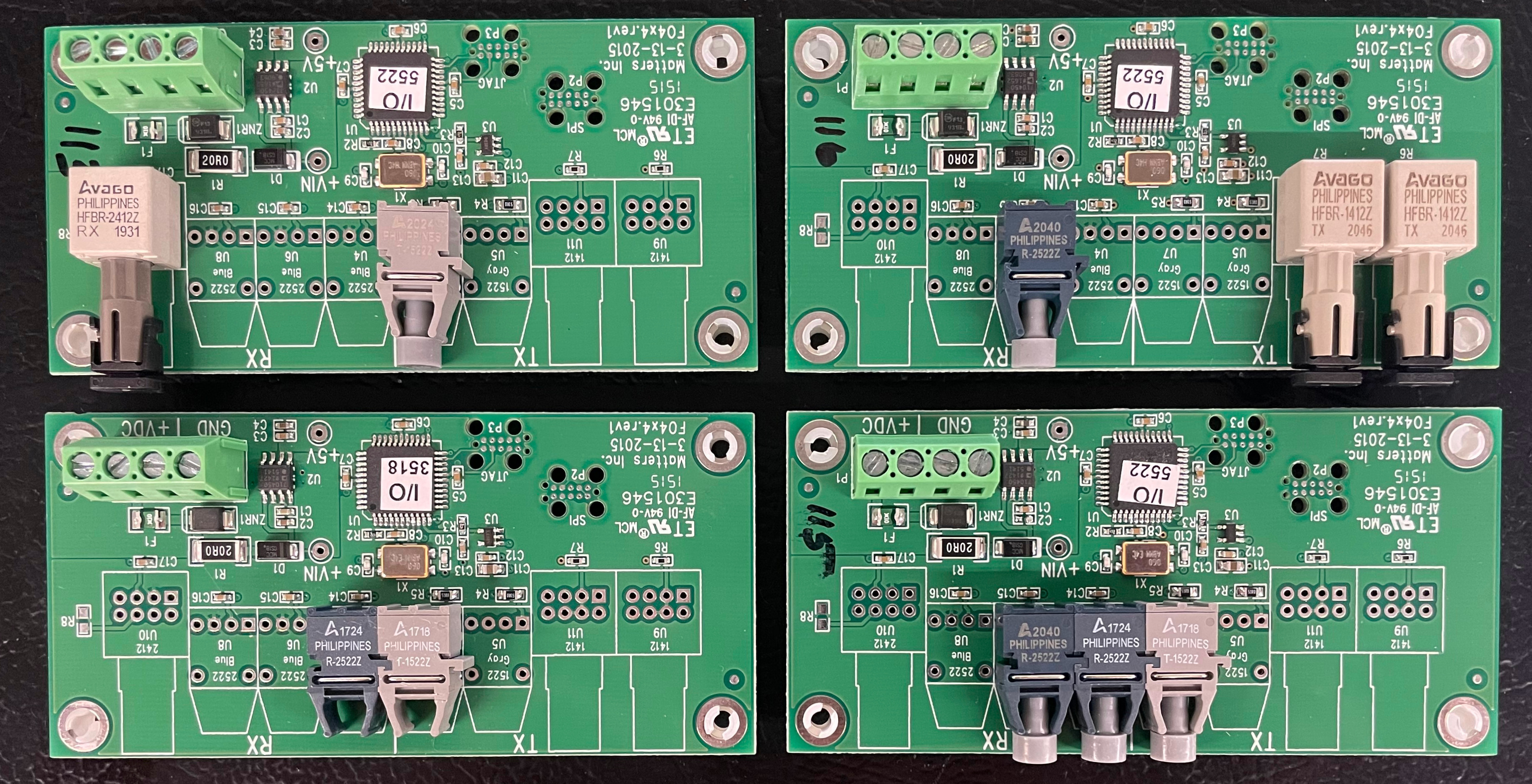 board. This board can now re-transmit or convert plastic fiber cable to glass and the reverse converting glass fiber to plastic. Multiple ports are available to allow for direct communication to multiple chambers or multiple console locations.
2015 saw the introduction of printed circuit card piston slips that utilized either a low profile square button short throw toggle switch or the use of long throw round switches from organ supply houses. This circuit board mounting of pistons removes the most tedious wiring in a pipe organ, allow pistons to connect to the optical keyboard contact card via a single ribbon cable. With the removal of 2 wires, + and – and unsnapping the fiber optic pair, the keyboard with piston slip and contact rail can be moved to the bench as a single and complete unit.
2016 saw a rework of the surface mount Output card smt- 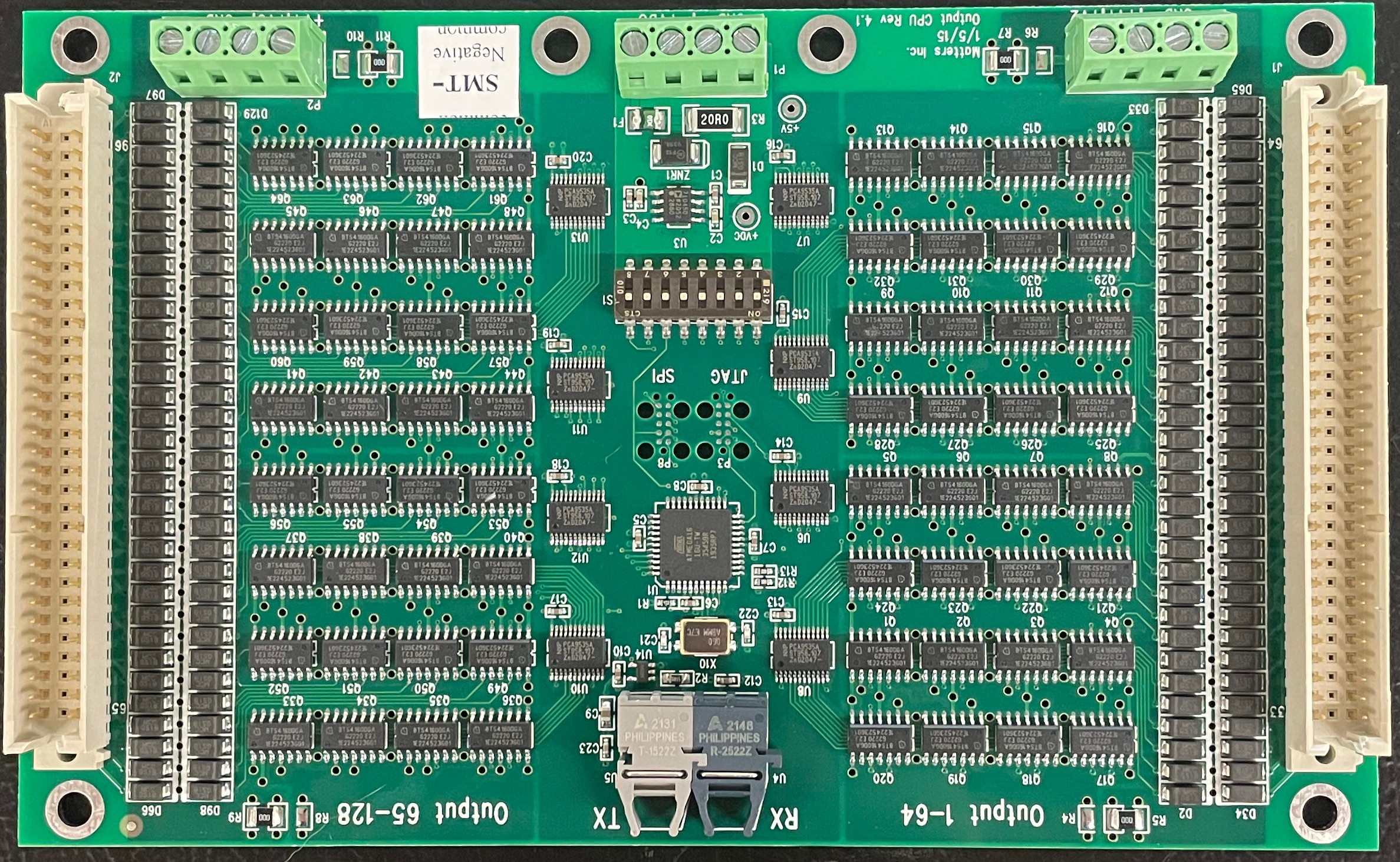 introduced in 2013 using I/O expanders. This allowed the replacement of 19 integrated circuit chips with 8, the goal of ever reducing component counts.
At the end of 2019, a new version of the CPx card was introduced dubbed the CPx5. While not visually different from the 2012 version, the microprocessor chip set is upgraded in memory size and clock speeds. But more importantly, this card is running a completely new object oriented language OS ratheer than the previous assembly language programming. While compatible with all previous hardware components, the intent of this board is to allow for an upgrade path for all systems, both CPU and copper box, thus making all systems “new”. Many updates in “power up programming” make it simpler and easier to setup.
2020 saw continued development of the CPx OS. Of particular note, the memory levels use a compressed format to reduce bandwidth when reading and writing, a typical reduction is 80%. Also a conversion utility is available that converts the “power up programming” file into spreadsheet format for viewing and printing.
In 2021, the development was completed of the “tuning app” for iphones: a user interface to play, test, and tune pipes while mobile in the pipe chamber.  This incorporates a small circuit card
 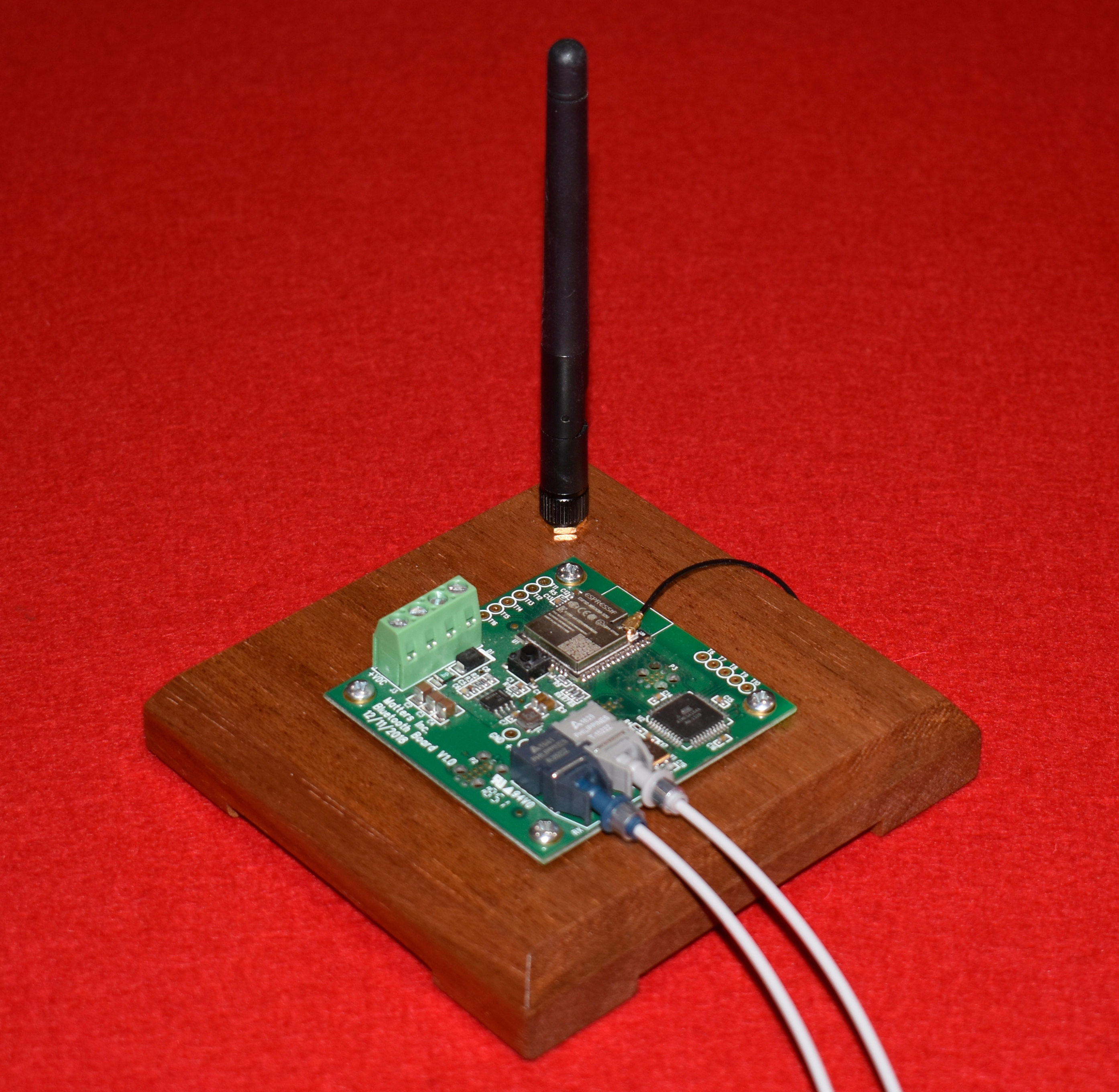 with antennae and operates via bluetooth https://en.wikipedia.org/wiki/Bluetooth interface.
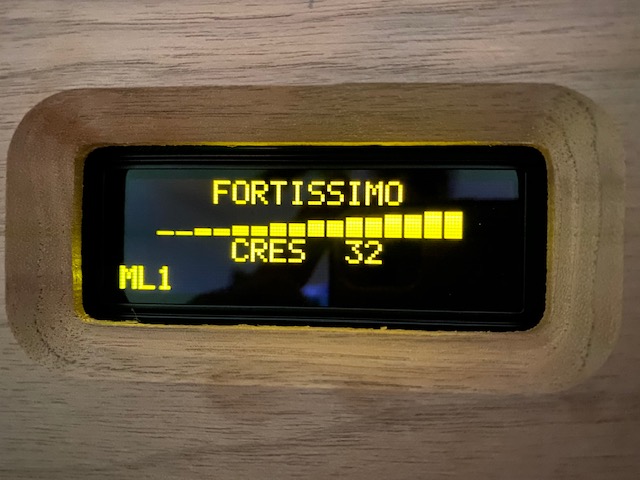
Finally an advancement in LCD technology that became available in 2021 for the common 4×20 alpha-numeric display, a drop in replacement for the LCD screen in OLED technology. This tech means that only the pixels that are used are actually LEDs that turn on, pixels that are not used are LEDs that are not turned on. Gone is the idea of turning the pixel with voltage for proper viewing angle. Thus component count is down as well as time to set the viewing angle.
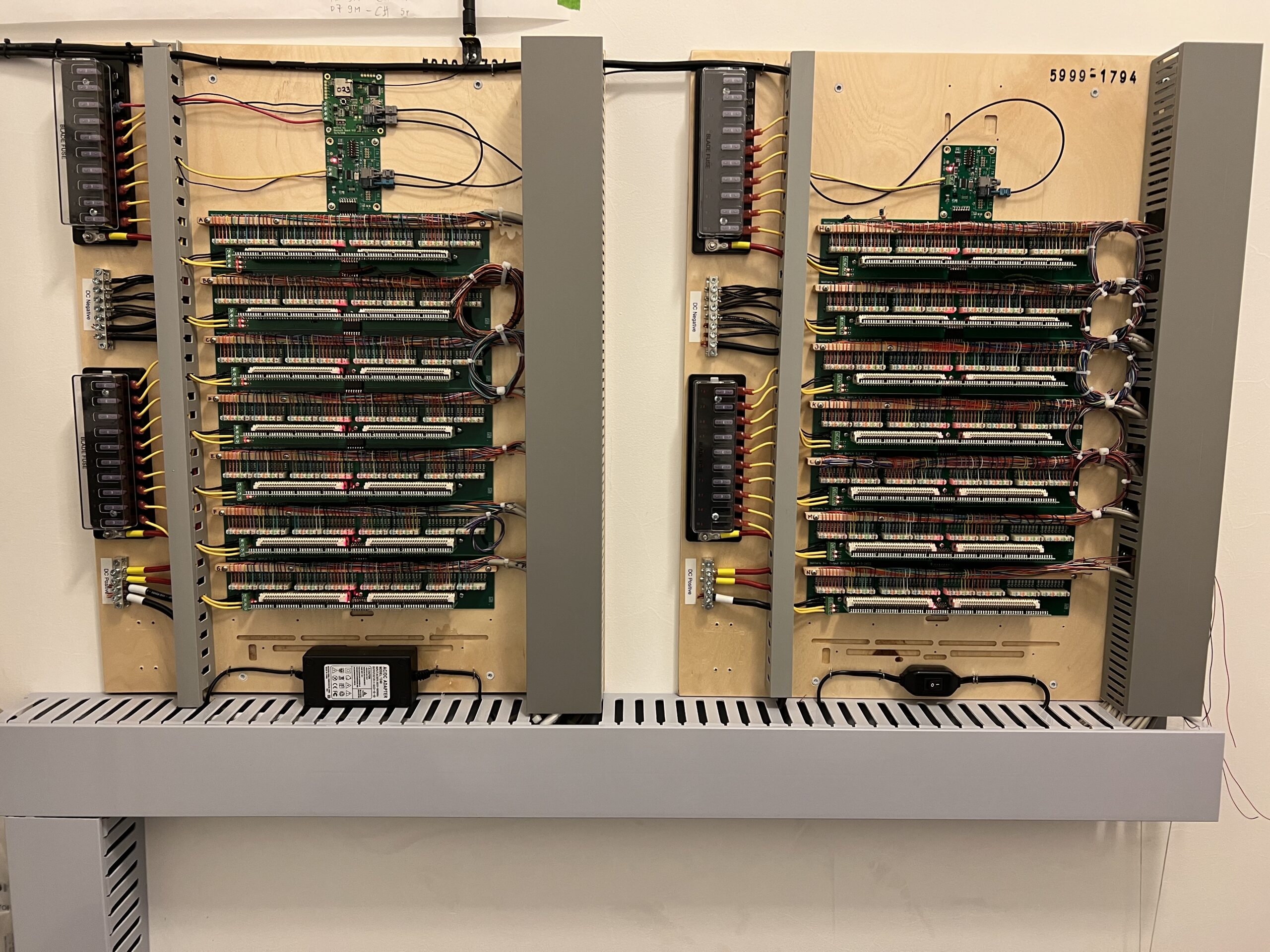
2022 saw the completion of a new chamber output panel. This panel comes completely wired from power supply leads incorporating all proper wire and fuse sizes. Chest cables are now punched down using the “110” standard The Output card is now a simple plug in whereby exchange can be made without removing a single wire! Also LEDs are present for diagnostics of each output, power, and communication! As well the fuse blocks have obvious LEDs indication of a blown fuse! With so many improvements, it almost make one want to go back to previous generations and rewire!.
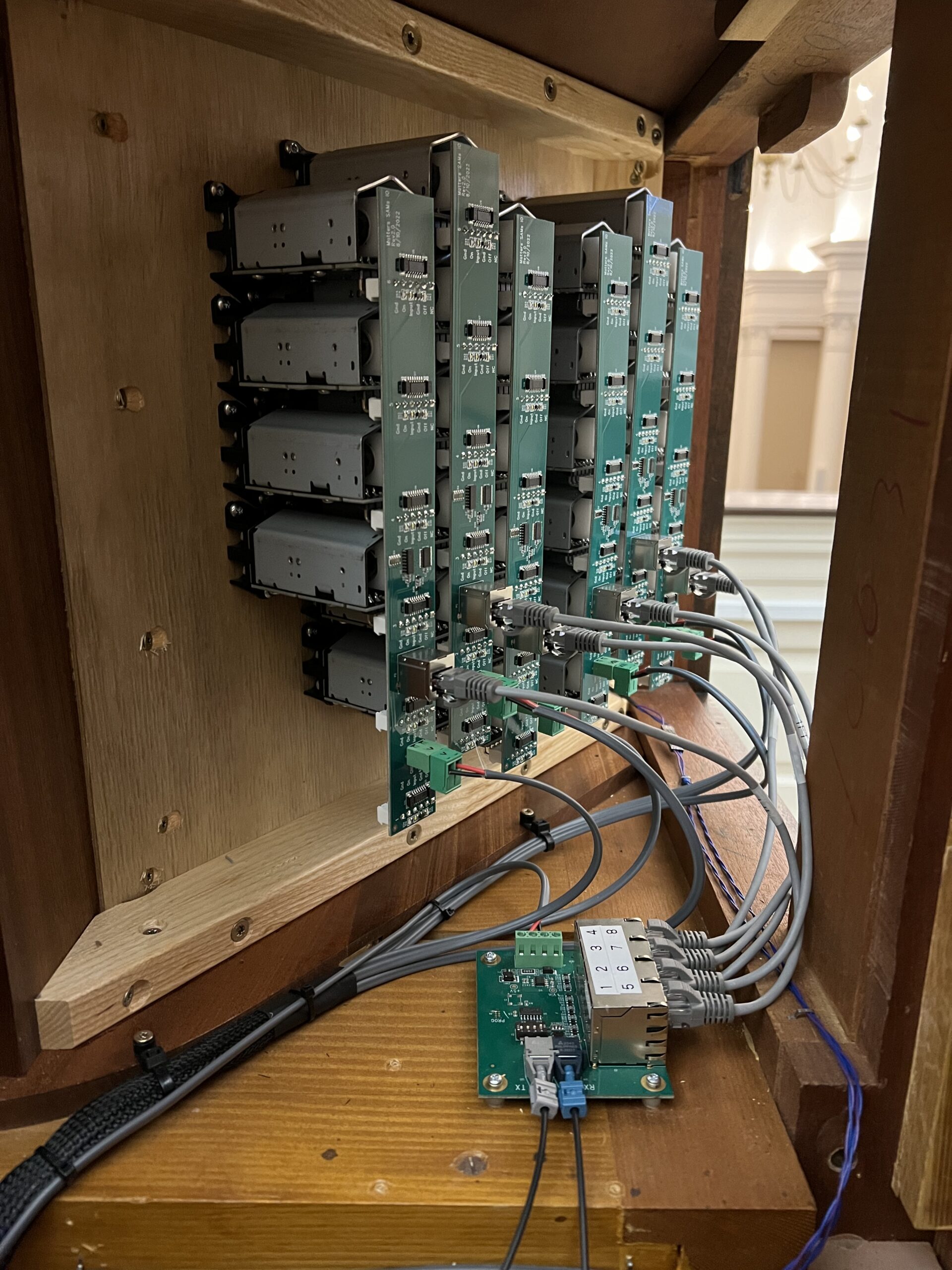
2022 also saw the completion of development and testing of new SAMs control in the console whereby the Input sense and Output On/Off circuitry is combined to eliminate wiring and keep the flyback diodes right at the coil! These improvements almost make one want to go back to previous generations and rewire!