Under development since 1982, with beta site in 1986, Matters, Inc. introduced it’s first integrated relay and combination action system combining all pipe ogan controls into one box while expanding capabilities and achieving reductions in component counts, copper wire cabling, plug connections, and installation time. This system uses copper boxes to contain all of the circuit cards: backplane, daughter or expansion, and motherboard. The use of copper makes the system easily idenifiable and helps contain EMI allowing the backplane to be continously attached by soldering.
The copper boxes contain all circuit cards, cableing is attached on one side to a backplane that has exposed pins grouped in a predefined fashion to allow for logical layout and minimal processing time. On the end is fusing and a power block for DC connection. Internally there are daughter boards that plug into the backplane and a mother card that plugs onto the daughter boards. Into this motherboard the fiber optic cable is attached thus connecting all of the copper boxes together in a daisy chain.
The console copper box contains all console control functions. Three types of cards reside in the box, 7 Input cards, 3 driver cards for outputs, and a mother card. The input cards are all the same, they can be swapped between input slots as are the driver card, they too can be swapped between any of the 3 driver card slots. The mother card carries the brain and memory while outputing to the LCD, MIDI, and fiber port to the pipe chamber.

Input cards

Driver card
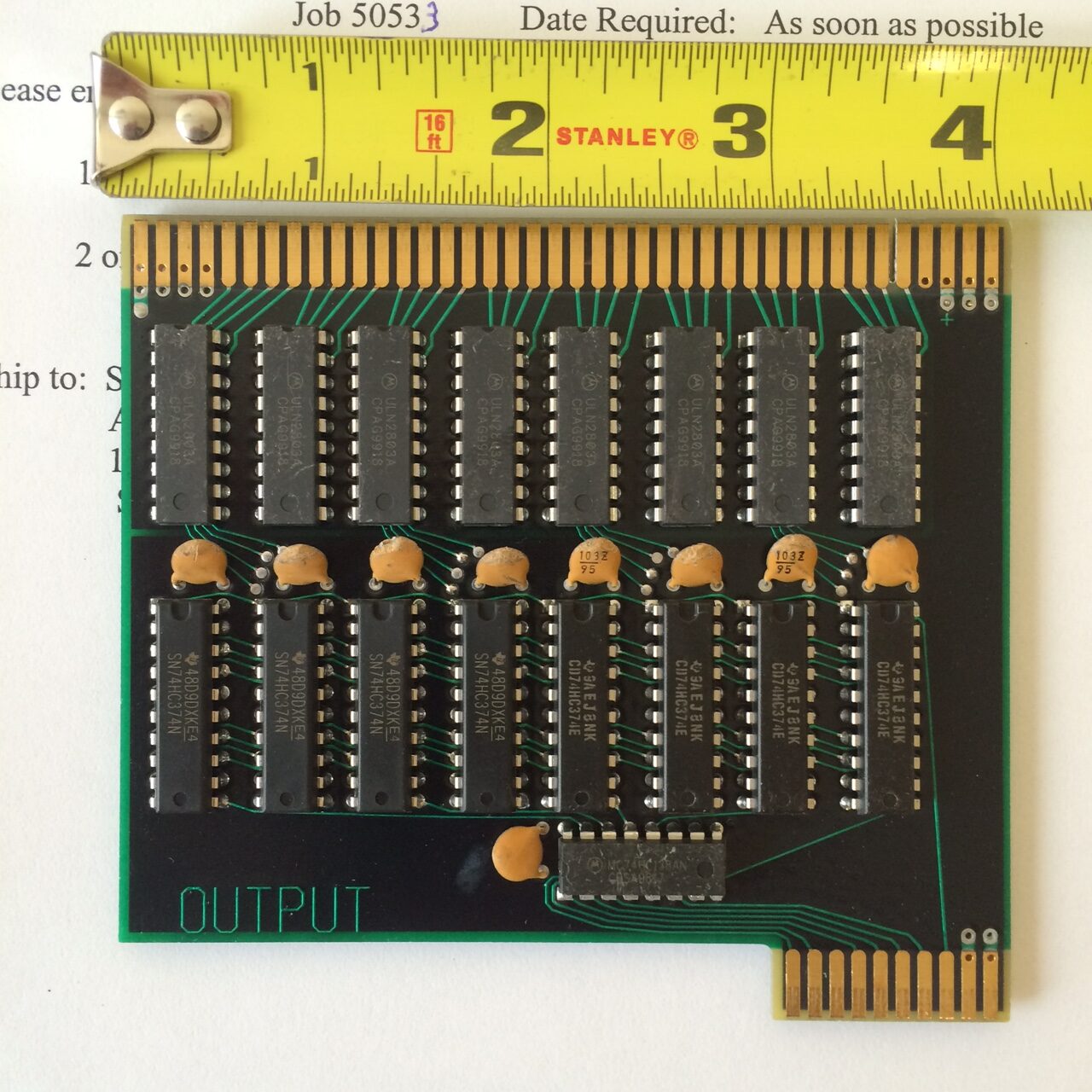
The pipe chamber boxes contain outputs for 320 magnets, 5 driver cards of 64 pins each and one mother card. Exactly like the console box, the mother card has fiber optic ports to receive data from the console box and retransmit this same data to the next pipe box. The driver cards are the exact cards as in the console box and can be swapped between any of the 5 slots. Depending on the address and programming data received from the console on powerup, this mothercard will calculate and play the 320 magnets in accordance to the builder configuration.
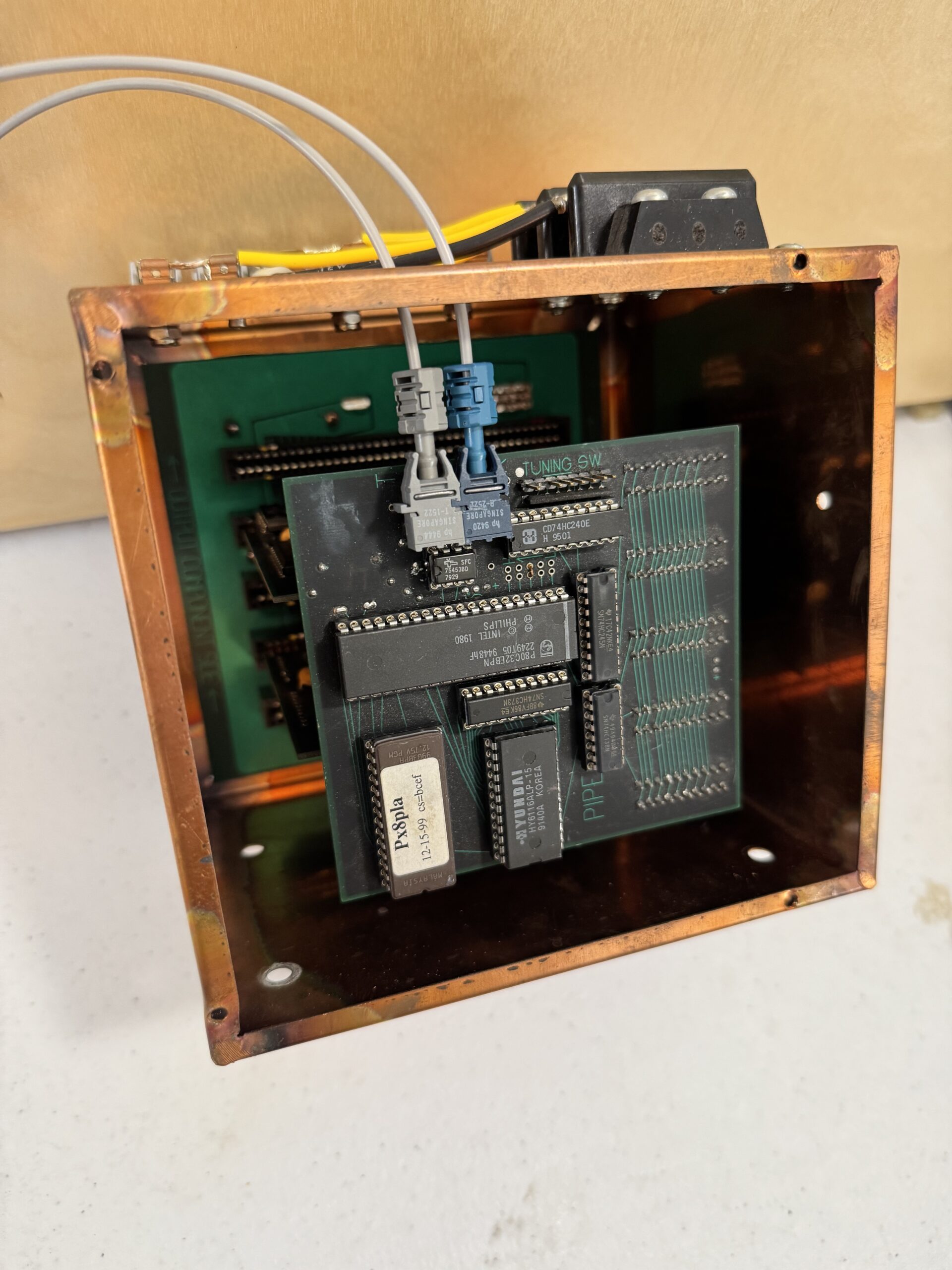
The copper box pioneered the use of ‘in system programming‘ whereby in conjunction with the LCD, all configuration is done at the time of installation allowing the builder to map inputs to outputs without making discreet wiring settings. Basically each installation is unique but the hardware is generic, it is only throught this builder configuration that the unique instrument is defined. Documentation listed under this Copper Box tab will describe the components, the wiring, the programming or configuring, and trouble shooting. Please use them.
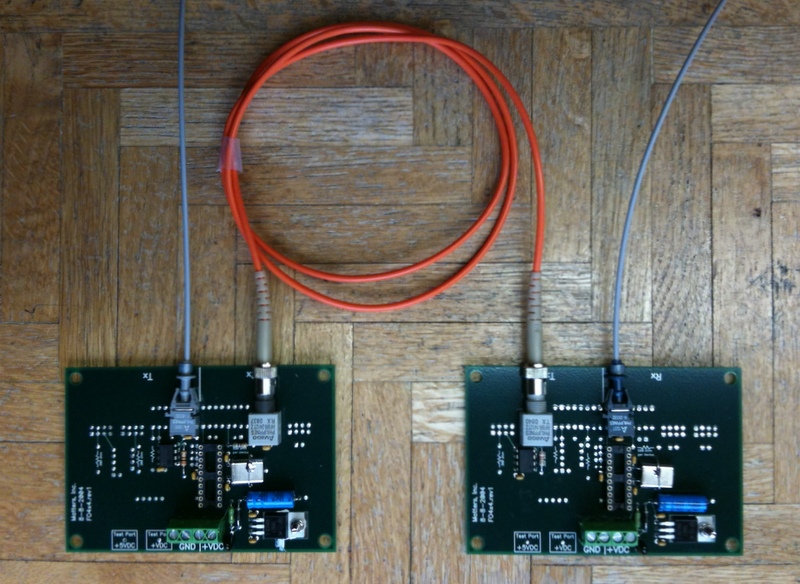
A fiber optic repeator or conversion board is needed when distances between console and chamber exceed cable lengths of 100’. Plastic fiber optic cable is used when distance is less than 100’ else glass fiber optic cable is required. To use glass cable, the plastic fiber needs to be converted to glass fiber requiring one of these boards at each end to convert to/from plastic/glass. Also this board can be used as an intermediate repeater to extend the transmission length of plastic cable by retransmitting the data at full strength to offset the light loss inherent in distances over 100′.
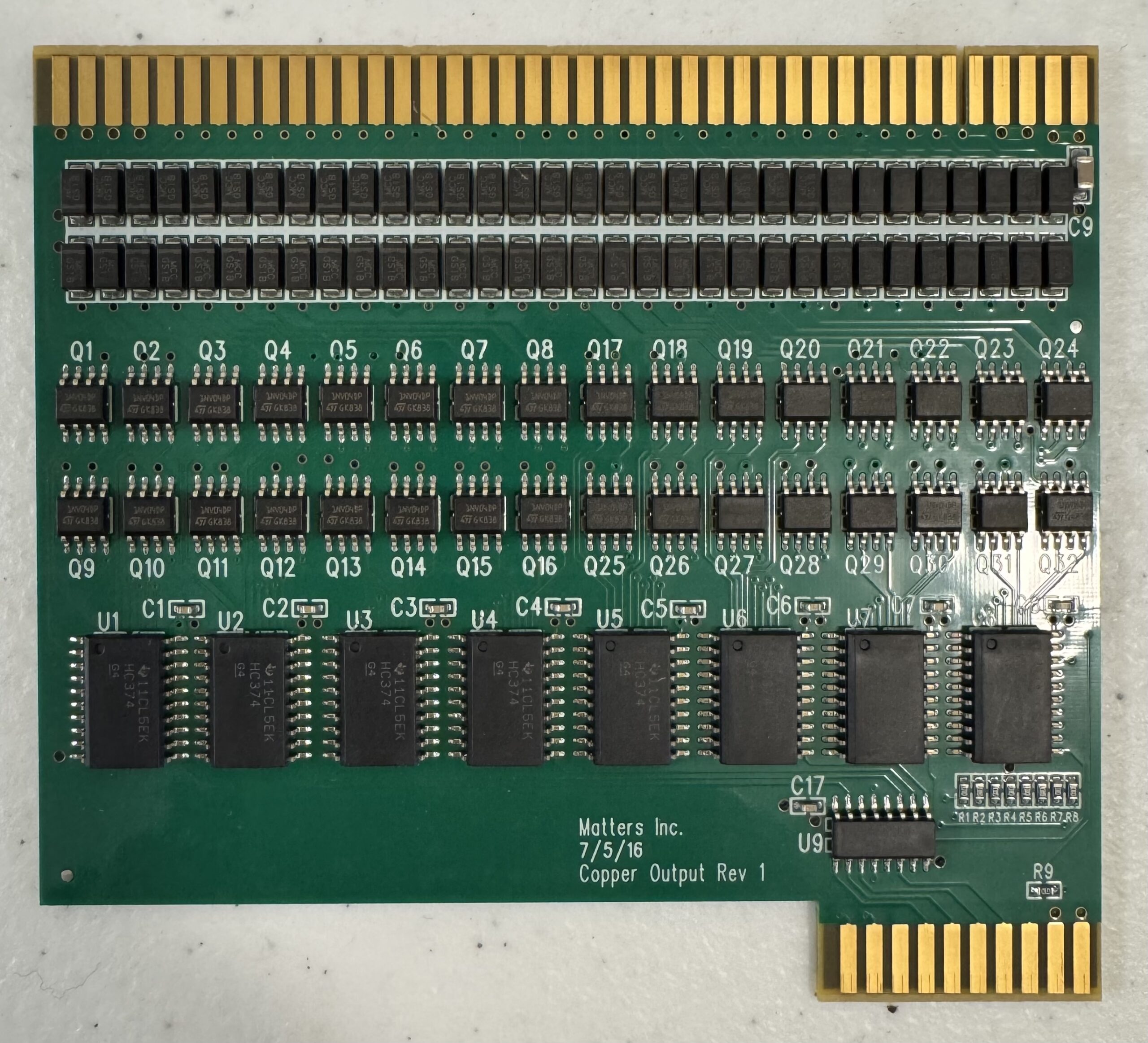
In2016 a new spin of the driver card was made utlizing the smt knowledge gained from the CPx5 generation, these cards us the same 1.2A/pin low side switches.